
Serial number
Where Is the Serial Number on a Catalytic Converter?
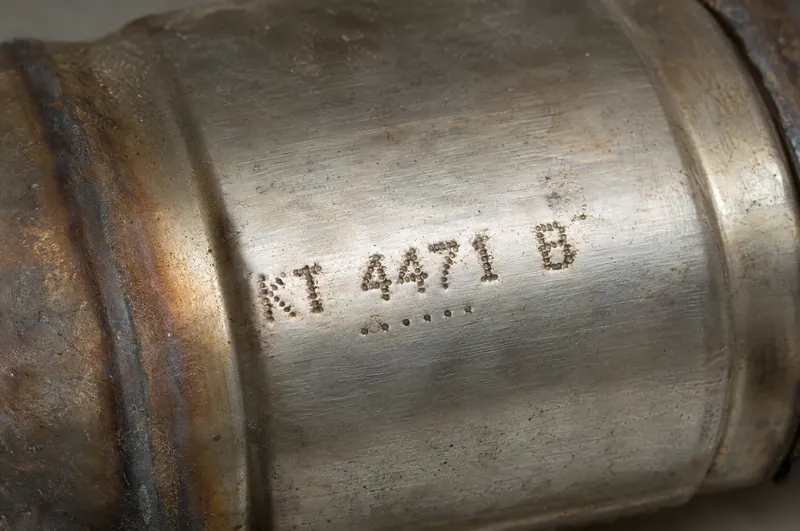
The serial number (code, marking) is the most important piece of information for valuing a catalytic converter. It is used to look the converter up in the catalog, and with it the model, weight and composition that determine its value.
Where the serial number is most often found
- On the metal housing — stamped or engraved directly on the body of the converter, usually on a flatter part of the shell.
- On the heat shield — the sheet-metal cover over the housing. The code can be on the top or bottom side, so check the whole circumference.
- Near a weld or flange — on some models the marking is closer to the inlet or outlet pipe.
Original (factory) markings often combine letters and numbers. An example from our catalog is the code 1K0 178 AA, which belongs to catalytic converters for Audi and Volkswagen vehicles.
Can't see the code — what to do
- Clean the surface with a soft wire brush or a cloth. Do not sand it — you could easily wipe out the engraving.
- View it at an angle under strong light (your phone's flashlight). Engraved marks are easier to see that way.
- If there are several markings, photograph all of them — both short numbers and longer codes.
Tip: do not cut the housing or remove the ceramic to find the code. The code is on the outside, and a damaged or loose core can affect the valuation.
How to photograph the code for a valuation
- One close-up photo, taken straight on, so that all characters are sharp.
- One photo of the whole catalytic converter, showing its shape and connections.
- Daylight or a strong lamp, without a flash that causes glare on the metal.
No markings at all?
Catalytic converters without a factory marking are often aftermarket (so-called universal) models. As a rule, we value these from a photo and vehicle details — send a picture of the whole part and the make and model of the car.
Found the code?
Send it for a valuation — the number or a photo is enough.